How to Choose Between Men’s Shoulder Bags, Crossbody Carries, and Leather Totes
Few accessories change the rhythm of a daily outfit like a well-chosen bag. It has to hold a phone, wallet, keys, maybe a tablet, and still look intentional when you walk into a meeting or meet friends after work. The right choice depends less on trends and more on how you move. If you want a versatile place to start, a Mens shoulder bag offers quick access and a relaxed silhouette, while other shapes solve different problems. This guide breaks down materials, proportions, comfort, and styling so you can choose with confidence.
Start With the Job, Not the Label
Function first. Ask what the bag must carry on a normal Tuesday. A compact bag that looks sharp but cannot fit your daily essentials will quickly become clutter in your closet. A large bag with no internal organization can be just as frustrating, because every search for keys becomes a small expedition.
- Commute: Look for a slim profile, a secure closure, and a dedicated pocket for cards or a transit pass.
- Travel: Prioritize adjustable straps, durable stitching, and enough space for a passport, charger, and compact camera.
- Weekend: Choose softer shapes and easy-access compartments for sunglasses, headphones, and a water bottle.
If you carry a laptop, check the internal dimensions instead of guessing from product photos. If you carry only essentials, a smaller bag keeps weight down and encourages you to leave unnecessary items at home. The best bag is not the one with the most pockets; it is the one that makes your daily routine feel smoother.
Why the Crossbody Shape Works So Well
A Mens crossbody bag keeps your hands free and distributes weight across the body, which makes it useful in crowded streets, airports, and public transport. The strap should be wide enough to avoid digging into your shoulder, but not so bulky that it overwhelms a lighter outfit. Look for an adjustable range that lets the bag sit near the hip or slightly higher across the chest.
Comfort is not a luxury in a daily bag. If the strap twists, the zipper catches, or the bag swings too much when you walk, you will stop using it.
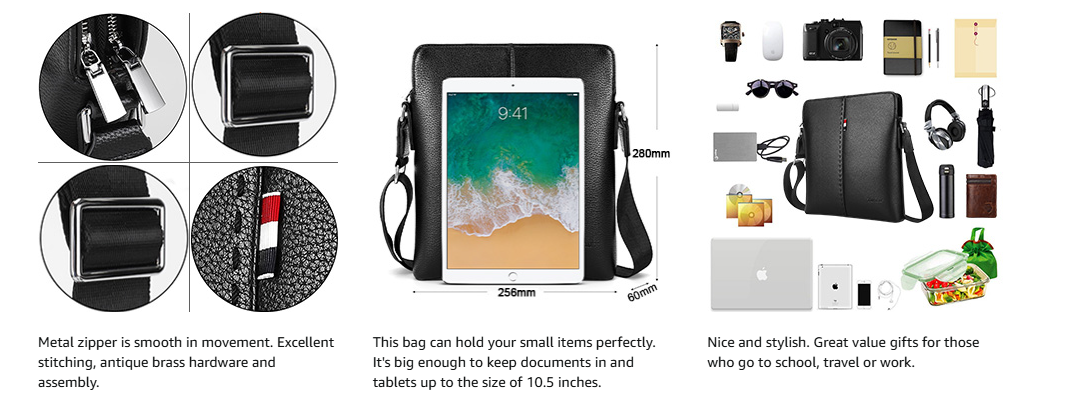
Pay attention to closure design. A flap with a hidden magnetic snap is easy to use, but a zipper offers more security in busy areas. Internal dividers help separate a phone from keys, while a quick-access rear pocket can hold a travel card without opening the main compartment.
Fit and Proportion
A bag that is too small looks like an afterthought; one that is too large can make the wearer look top-heavy. As a simple rule, the bag should end around the hip bone for a balanced look. If you are tall, you can carry a slightly longer strap drop. If you are shorter, keep the bag closer to the waist so it does not pull the visual line downward.
Leather Totes: Structure, Space, and Polish
A Leather tote bag brings a different energy. It is roomier, more formal in many cases, and especially useful for workdays when you need a notebook, laptop, and a change of shoes. The challenge is finding one that remains comfortable after an hour of carrying. Structure helps: a reinforced base, firm handles, and a wide opening keep the bag from collapsing into a shapeless pile.
- Check the base: A reinforced bottom protects the leather and helps the bag stand upright.
- Inspect the handles: Look for secure stitching and enough drop length to fit over a coat sleeve.
- Think about weight: Empty weight matters. A heavy tote becomes exhausting once you add a laptop and water bottle.
Full-grain leather tends to develop character over time, while corrected-grain leather may resist scratches but show less natural texture. Neither is automatically better; the right choice depends on whether you want a patina-rich finish or a low-maintenance surface.
Material and Detail Checklist
Build matters. Before you commit, inspect the details that separate a durable bag from a short-lived one.
- Reinforced stitching at stress points such as strap anchors and handle joins.
- Metal hardware with a smooth finish and no sharp edges.
- Interior pockets that are deep enough for a phone but not so deep that small items disappear.
- Water-resistant lining or treatment if you commute in unpredictable weather.
Also consider the zipper. A stiff zipper on a curved opening can be awkward, while a smooth one makes daily use far more pleasant. If the bag has magnetic closures, test whether they hold securely when the bag is full.
How to Style These Bags Without Overthinking It
Keep the silhouette balanced. A structured tote pairs naturally with tailoring, knitwear, and clean sneakers. A soft crossbody works with denim, overshirts, and relaxed outerwear. Neutral colors such as black, tan, charcoal, and deep brown are easy to wear, but a muted olive or navy can add interest without becoming difficult to match.
For a sharper look, match the bag’s hardware to other visible metals, such as a watch or belt buckle. For a casual look, let texture do the work: pebbled leather, canvas straps, or matte hardware can make a simple outfit feel more considered.
Final Buying Advice
Choose based on carry needs, then refine with proportion and material. A Mens crossbody bag is hard to beat for everyday movement, while a structured leather tote is the stronger option for work and travel days that demand more space. Buy once, use often, and let the bag support your routine rather than complicate it.